
In the mid-1850s, Charles Spurgeon stepped into his London pulpit carrying little more than a brief outline of notes. He preached extemporaneously, as he almost always did. Somewhere in the congregation, a stenographer wrote down his sermon in shorthand as he spoke.
The next day, Spurgeon sat with that transcript and made his revisions. Then it went to the printer. Within days, the sermon was for sale across England for a penny. In time, the sermons were circulating across the English-speaking world and being translated into more than twenty languages.
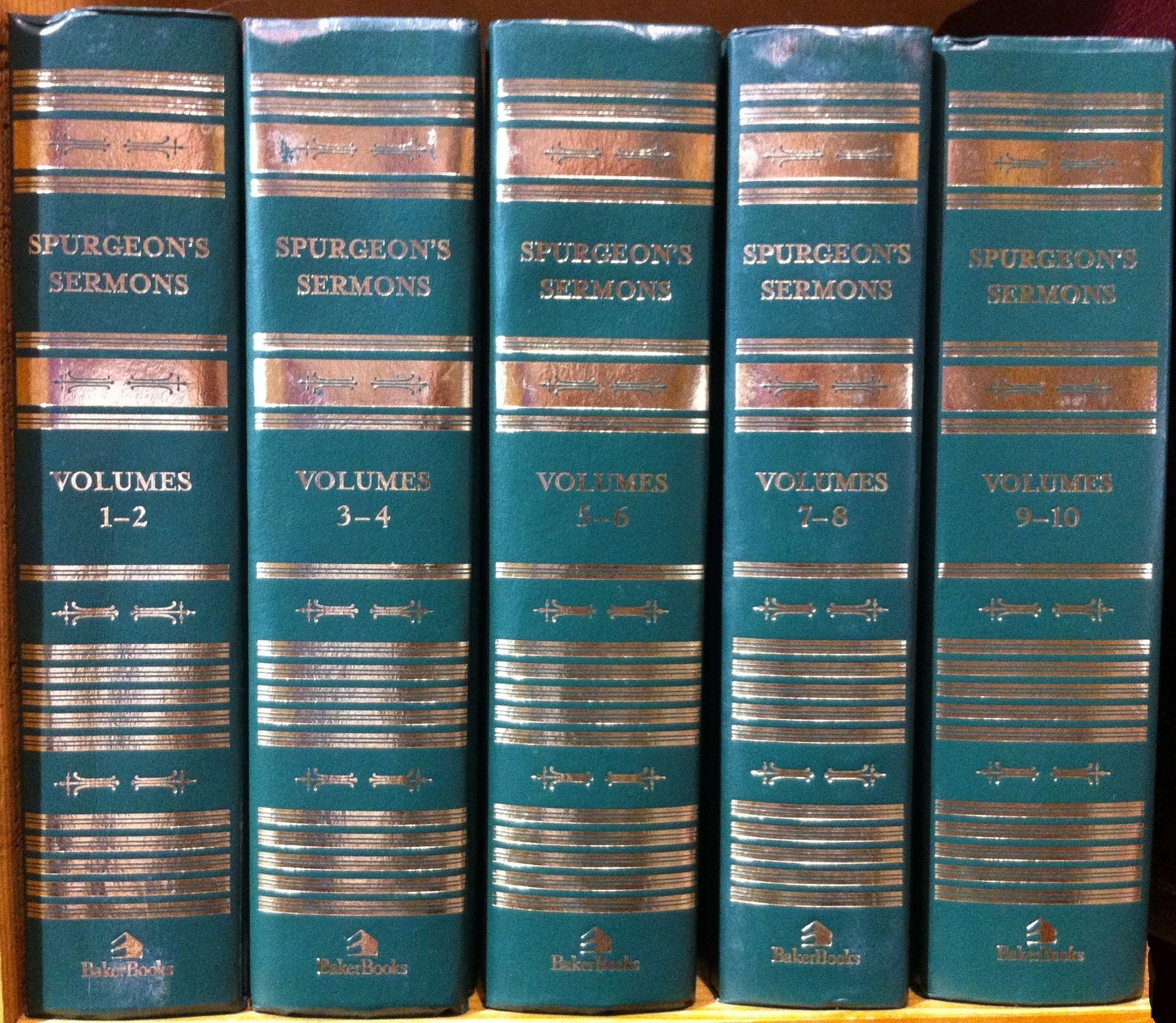
That weekly rhythm continued for sixty-three years. It stopped in 1917, twenty-five years after Spurgeon's death, only when a paper shortage from the First World War forced the publishers to suspend it. By that point, the collected weekly sermons had filled sixty-three bound annual volumes, first under the name the New Park Street Pulpit and later the Metropolitan Tabernacle Pulpit. They remain one of the largest bodies of published Christian preaching in history.
What Made It Possible
The remarkable thing about Spurgeon's published sermons is not that they exist. It is how they came to exist.
The sixty-three volumes were not a book project. Spurgeon did not sit down one day and decide to gather his sermons into a book, and then another day, and another. He was a preacher, consumed with the weekly demands of a congregation that eventually grew to six thousand members, a pastors' college, an orphanage, and dozens of Christian charities. Writing a separate book of sermons from scratch, in addition to everything else, was not the plan. The volumes emerged from a completely different mechanism.
Spurgeon's weekly sermons were being printed and sold for a penny apiece, cheap enough that ordinary people across England could afford to buy one. His friend Joseph Passmore, who ran a small printing business in London with his partner James Alabaster, recognized the extraordinary public demand for Spurgeon's preaching and committed to publishing a new sermon every week. That weekly penny pulpit launched on January 7, 1855. It did not stop until 1917.
The mechanism at the heart of it was the stenographer. Every Sunday, someone was there in the congregation capturing the sermon accurately as it was preached. Spurgeon's role in the publication process was to revise the transcript the following day before it went to the printer. The stenographer made the weekly rhythm possible. The printer made the distribution possible. The annual volumes followed naturally from the collected weekly work.
Without the stenographer, there are no weekly sermons. Without the weekly sermons, there are no annual volumes. Without the annual volumes, there is no sixty-three-year body of published preaching. The entire legacy depended on someone, week after week, capturing what Spurgeon said with enough accuracy to publish.
What This Has to Do With a Pastor Today
Most pastors who think about publishing assume the path runs through months of new writing. A book, written the way trade books are written, from a blank page, over a period of time that most pastors do not have and will likely never find. Filed under someday.
Spurgeon's path was different. He did not write his way into sixty-three volumes. He preached his way into them. The writing that produced the books was the writing his sermons were already receiving every week from someone else, for purposes that had nothing to do with publishing a book. The book, when it came, was simply the collected weekly work.
A pastor today who preaches forty-four times a year produces, in the course of a single ministry year, the equivalent word count of several published books. Most of that material will never be read by anyone who wasn't in the room on a Sunday morning. Audio files get migrated and lost. Video platforms change and archives disappear. Church websites get redesigned, and the sermon library that was supposed to be preserved quietly vanishes with the old design.
The question worth asking is not whether a pastor has enough material for a book. He almost certainly does. The question is whether that material is being captured accurately and consistently enough, week by week, to become anything at all.
Spurgeon had a stenographer. A pastor today has the modern equivalent: a professionally produced sermon transcript, accurate, verified, ready to read, delivered every week without the pastor having to think about it. The work of the stenographer is what makes everything downstream possible. Without it, the sermon exists only as spoken words that fade the moment they are spoken.
The Volumes Spurgeon Never Planned
What Passmore and Alabaster eventually produced was not a book project. It was a publication rhythm that turned into a library over time.
That is the model worth reconsidering for pastors today. Not the trade book, written from scratch over months. The bound volume, produced from sermons already preached, prepared for print, and gathered into collections organized by year, by series, or by season.
A pastor who has been receiving accurate transcripts for five years is not starting from scratch when he decides to build a volume. He is finishing something that has been building all along, the same way Spurgeon's sermons were building into books long before anyone had printed one. The work of the week is also the work of the volume. The two are not separate jobs. They are the same job, seen at different time scales.
Spurgeon's sixty-three volumes exist because someone was paying attention to the weekly work. Most pastors today are not. Their sermons are preached, recorded as audio, uploaded to a server, and quietly lost over time. The infrastructure that made Spurgeon's legacy possible is the infrastructure most pastors have never had.
It is, however, the infrastructure most pastors can have now.
A Category Worth Reconsidering
The preached volume is a legitimate and honorable form. It has a longer history in Christian publishing than the trade book, and for most of church history it was the dominant form in which a pastor's teaching reached the world beyond his congregation. It preserves the pastor's actual voice, the one his congregation knows, rather than a more formal voice adopted for a literary audience. It honors the sermon as the form it was always meant to be. And it produces something tangible, something a pastor can hand to his children and grandchildren, without asking him to become a different kind of writer than he already is.
For pastors who have been sitting on the idea of a book for years without making progress, this may be the path that was always the right one. The archive is already being built, week by week, whether anyone is paying attention to it or not. The only question is whether the weekly work is being captured with enough care to become something worth binding.
Spurgeon's legacy depended on that care. So does every pastor's.
If you could bind one year, one series, or one season of your preaching into a volume your grandchildren could pull off a shelf fifty years from now, which one would you start with?
If you have a question about preparing your sermon archive for print, click here to send me an email. I personally respond to each one.
Multiplying the reach of every sermon,
Ginger
P.S. Spurgeon had a stenographer. Modern pastors have SermonScribe. We've been producing accurate, publish-ready sermon transcripts for pastors and churches since 2008. Want to see what a finished transcript looks like? Browse sample transcripts here. →
